We’re currently performing technical maintenance. Some features may be temporarily unavailable. Thank you for your understanding.
How to fill out a specialist profile
Why It’s¨Important to complete your profile properly
One of the key steps when starting to work with WeCan is filling out your specialist profile. Your profile acts as a personal business card – it’s the first thing clients see and often the decisive factor when choosing a provider. A well-prepared profile builds trust, demonstrates professionalism, and helps you attract more projects. Clearly structured information makes it easier for clients to evaluate whether you are the right fit for their needs.
What a Specialist’s Profile Should Include?
Your profile should be comprehensive, clear, and visually appealing. The main building blocks are:
- CV
- Examples of work
- Diplomas and certificates
- Language skills
- Video introduction
- Reviews and ratings
- Contact information
Each of these parts plays a role in building trust and a professional image.
CV
How to write a good resume?
The resume in your WeCan profile should clearly summarize your professional journey. The most suitable format is reverse chronological order – start with your most recent work experience and gradually move to the older ones.
Professional experience
Describe your job positions, responsibilities, and key achievements in detail. Show that you have already dealt with similar tasks that new clients may expect. Each entry should demonstrate concrete results – e.g., “managed a team of five workers” or “completed the renovation of a 20 m² bathroom.”
Technical and soft skills
Include not only professional knowledge (e.g., working with specific tools, software, or technologies) but also soft skills such as communication, reliability, or teamwork. These qualities carry significant weight when a client is deciding.
 Recommendation: In the resume in your profile, we do not recommend including your contact details or last name, as the automatic review system may not approve such a resume. This rule is in place to protect your personal data and to ensure faster profile approval.
Examples of work
How to present projects?
A portfolio is clear proof of your quality for the client.
✔ Photos + description – always add visual examples of completed work, accompanied by a short description.
✔ Your role and results – for each project, specify what part you were responsible for and what was achieved.
✔ Structured and visually attractive portfolio – a clear division of projects by type of service (e.g., painting, installations, consultations) improves readability and credibility.
Your portfolio should look professional but also authentic – without exaggeration, yet with clear facts.
Diplomas and Certificates
Diplomas and certificates prove your qualifications and expertise. It is a good idea to include the following in your profile:
✎ Schools, fields of study, years of study – your education and obtained degrees.
✎ Courses and seminars – both short-term and long-term programs that expanded your skills.
✎ Further education – participation in professional training, workshops, or international conferences.
Such information shows that you actively pursue learning and keep up with new trends.
Language Skills
Our platform is multilingual, and clients and contractors can speak different languages. For comfortable communication and successful collaboration, it is important to indicate your level of language proficiency. This will help us find the most suitable clients and projects for you.
In some areas, knowledge of certain languages is a prerequisite for task completion, such as working in a multilingual or multicultural team. Specialists who speak several languages can significantly expand project possibilities, helping to penetrate new markets and establish contacts with international partners.
Be precise when listing your language skills – for example: “English – advanced (B2).”
Video introduction
How to record an effective video?
A quality video introduction can be the deciding factor when a client chooses a specialist – it feels personal, natural, and clearly sets you apart from the competition. Clients not only read a text description but also see and hear the person behind the profile. This helps them build trust and form a first impression, which is often the key to winning a job.
Brief introduction
Start with a short opening: state your name, field, and the main services you offer. It’s important to appear friendly and confident, yet natural.
Personal qualities
The video is your chance to show not only your professional experience but also your human side. Clients appreciate when you come across as pleasant, open, and enthusiastic about your work.
Professional experience
Briefly summarize your practice or specific projects. Be sure to highlight what sets you apart – whether it’s precision, speed, creativity, or experience with certain types of tasks.
★ Example scripts by profession ★
Tutor of French
Start the video speaking French right away, for example with a simple greeting and sentence: “Bonjour, je m’appelle Anna et je peux vous apprendre à parler français.” The client immediately hears that you truly master the language and gets an idea of your teaching style.
Cleaning services
Record a short demonstration of your work, e.g., washing windows or cleaning carpets. So-called “satisfying videos” are very popular today – people love watching surfaces shine or dirt being removed. Use this trend and make your presentation an attractive visual experience.
Craftsman or designer
Take advantage of modern formats and shoot a short “room tour” or review of your work. Show, for example, bathroom tiles laid so straight they look like graph paper squares, or moldings joining in corners with laser-like precision. Perfectionists will notice every detail, and such a video will convince them that you’re the right expert to work with.
Practical tips for filming
Good lighting and sound
➤ Record in a well-lit space and ensure clear sound. You don’t need professional equipment – even a smartphone is enough if the lighting and environment are right.
Help from a friend
➤ Sometimes it’s better to have someone else film you, so the camera is stable and the shot looks natural.
Simple editing
➤ Use beginner-friendly mobile apps such as CapCut. With them, you can easily add subtitles, background music, or simple cuts.
 Remember: Your video introduction should be short (1–2 minutes), natural, and authentic. It’s your chance to show clients that there’s a real person behind the profile, ready to deliver quality services.

Reviews and Ratings
How to get more reviews?
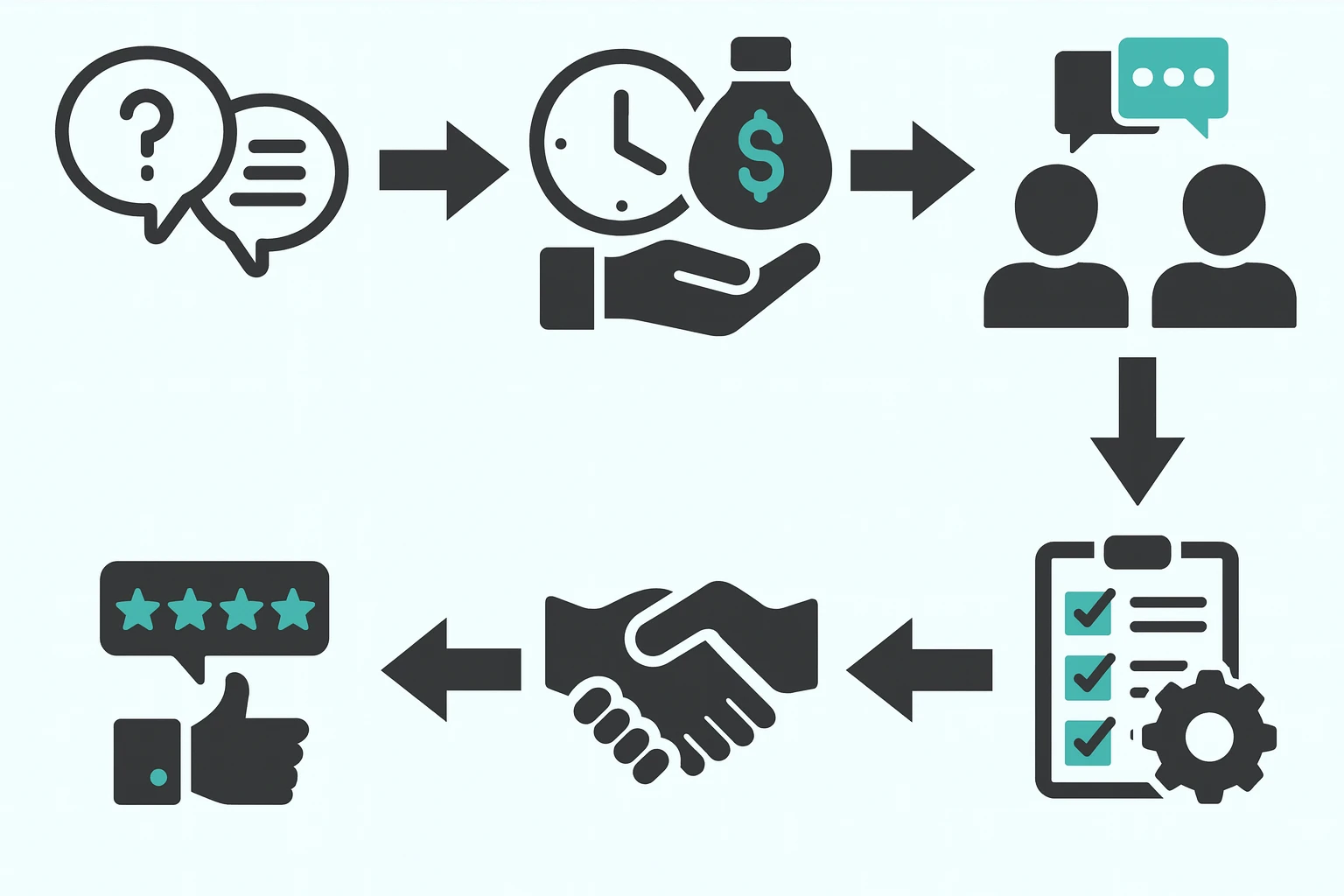
To maintain a steady flow of feedback and build a strong reputation, it’s important to consider the entire client collaboration process. Every step counts:
Quick response to new orders
The faster you reply, the more clients appreciate your reliability and professionalism.
Transparent offer
Include an approximate price and scope of work in your initial response. Clients like to know upfront what to expect.
Polite communication
Be courteous throughout the collaboration and clearly communicate deadlines and details. This builds trust.
High-quality work
The best business card is your result. A satisfied client is much more likely to share a positive experience.
Ask for feedback
Remind clients that their opinion matters to you. A direct request significantly increases the likelihood that they will leave a review.
Build a strong rating
The more quality reviews you collect, the higher your rating on WeCan will be. This leads to greater visibility and more job opportunities.
How to properly ask for a review?
1. Choose the right moment
Ask for a review immediately after completing the work, while the client is satisfied and the experience is still fresh. This increases the chances of receiving a positive and detailed review.
2. Be specific
Explain why the review is important to you. Mention that it helps improve your services and is important for your professional growth.
3. The process
We have simplified the review process. After the order is completed, the client is automatically prompted to fill out a form rating three criteria: punctuality, politeness, and quality of work.
 If you’re unsure how to approach a client, we also provide letter templates and practical tips in the article How to Ask for a Client Review: A Guide and Email Templates, which will make communication easier and increase your chances of getting a review.
Contact Information
Don't forget to update the contact information in your personal profile. Even though the client will not see your contact details until they choose you as a specialist, it is important that they can easily reach you. Inaccurate contact details can lead to the loss of potential jobs.